Resistance bands are the most versatile, portable, and affordable strength tool you can own. They fit in a backpack, they are gentle on the joints, and they let you train every muscle from anywhere — a living room, a hotel room, or a park bench. This guide covers how bands work, a full-body band routine with sets and reps, the form cues that matter, and how to keep progressing.
Fortes, portables et abordables : les bandes de résistance sont l'outil parfait pour s'entraîner partout.
How resistance bands build real strength
Bands create variable resistance: the further you stretch them, the harder they pull. That means constant tension through the whole range of motion and a strong peak contraction — the point where muscles work hardest. Bands also force you to control the return (the lowering phase), which adds valuable time-under-tension. For hypertrophy and strength-endurance, that combination is genuinely effective.
Types you will use:
- Loop / mini bands — best for lower body, glutes, and mobility.
- Tube bands with handles — best for pressing, rowing, and curls.
- Long flat / aerobic bands — great for assisted pull-ups, stretching, and rehab-style work.
Warm-up (4 minutes)
- Band pull-aparts — 15 reps. Shoulders and upper back.
- Banded good mornings — 12 reps. Hips and hamstrings.
- Banded lateral walks — 10 each way. Glutes.
Full-body resistance band workout
Perform as 3 rounds. Choose a band tension where the last 2 reps of each set are challenging.
1. Banded squat
Stand on the band, handles at shoulders. 15 reps. Cue: sit back and down, drive through mid-foot.
2. Banded chest press
Anchor the band behind you at chest height, press the handles forward. 12 reps. Cue: control the return, do not let the band snap you back.
3. Bent-over band row
Stand on the band, hinge forward, row to the ribs. 15 reps. Cue: squeeze shoulder blades, keep the back flat.
4. Banded Romanian deadlift
Stand on the band, hinge at the hips with a soft knee, feel the hamstrings stretch, then stand tall. 15 reps. Cue: push the hips back, not down.
5. Banded overhead press
Stand on the band, press handles overhead. 12 reps. Cue: brace the core, keep ribs stacked.
6. Band biceps curl + triceps pushdown superset
Curl the handles up for 15 reps, then anchor the band high and push down for 15 reps. Cue: keep elbows pinned to your sides.
7. Banded glute kickback
Loop a mini band around your ankles, kick one leg straight back. 15 per leg. Cue: brace the core so only the hip moves.
8. Pallof press (anti-rotation core)
Anchor the band to the side at chest height, press straight out and resist the pull. 12 per side. Cue: stay square, do not twist.
Sample band program
- 3 days a week: run the full-body circuit above, 3 rounds.
- Progress by: moving up a band tension level, doubling a band for more resistance, slowing the lowering phase, or adding a fourth round.
- On the road: pack a tube set with handles and a door anchor — you have a full gym in a pouch.
Common band-training mistakes
- Choosing a band that is too light. If you can breeze past the rep target, size up. The last two reps should be hard.
- Snapping through the return. Control the lowering phase — that is half the muscle-building stimulus.
- Anchoring unsafely. Use a proper door anchor and check it before loading. Never anchor a band to anything that can shift or break.
- Only training the mirror muscles. Balance presses with rows and squats with hip hinges to stay injury-free.
- Never progressing tension. Bands make overload easy — double them up, step wider for more stretch, or move to a heavier level.
Frequently asked questions
Are resistance bands as good as weights? For general strength, muscle, and conditioning at home, bands are highly effective thanks to variable resistance and constant tension. Serious powerlifters will still want barbells, but for most people bands do the job.
What tension should I buy? A bundle or adjustable set that covers light to heavy is the most flexible choice, so you can match resistance to each exercise and keep progressing.
Will bands wear out? Quality bands last for years with care. Keep them out of direct sun, avoid over-stretching beyond roughly 2.5x their length, and wipe them down after sweaty sessions.
Gear: bands for every job
From a single adjustable band to a full bundle with handles, ankle straps, and a door anchor — all in stock and shipping across Canada with free shipping on qualifying orders.


Recovery and performance support
Band training still builds muscle, so the recovery basics apply: enough protein, hydration, and consistency.
- Protein (whey or plant) — daily target for muscle repair.
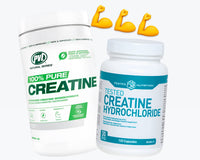
- Creatine monohydrate — strength and training output.
- Aminos + electrolytes — hydration and amino support during sessions.


Bands prove you never need a gym to get strong — just tension, control, and consistency. Keep a set by the door and use them. La force se construit partout.