Q: How do I read a supplement label in Canada? Look for the NPN number first, then check the active dose per serving, the third-party testing seals (Informed Choice / Informed Sport / NSF), and the hidden sugars or maltodextrin in the ingredients list.
Why Canadian supplement labels are different
Canadian supplement labels follow Health Canada's Natural Health Products Regulations. They are stricter than the US FDA rules in two key ways: every legal NHP supplement must have an NPN (Natural Product Number), and every active ingredient claim must be supported by evidence reviewed by Health Canada. That means a Canadian label is more trustworthy by default than its US counterpart — but you still have to know what to look at.
At Top Nutrition & Fitness in Montreal we sell only Canadian-compliant brands since opening in July 2016. Here is the exact label-reading framework we use when curating the catalog.
1. The NPN: the first thing to check
NPN stands for Natural Product Number. It is an 8-digit code issued by Health Canada after a product passes safety, evidence, and manufacturing review. You will find it on the front or side panel.
- If there is no NPN — the product is either grandfathered (rare) or being sold outside Canadian channels. Ask the store.
- If the NPN is present — you can look it up in the Licensed Natural Health Products Database (LNHPD) on canada.ca to verify the listed dose claims.
2. Active ingredient dose per serving
This is the most important line on the label after the NPN. Look at the active dose, not the total scoop weight.
Reference doses to memorize
| Ingredient | Effective dose | Watch out for |
|---|---|---|
| Caffeine | 150–300 mg per pre-workout scoop | Stacking with coffee and energy drinks |
| Creatine monohydrate | 3–5 g daily | "Creatine blends" that hide the monohydrate dose |
| L-citrulline | 6–8 g per workout | "Citrulline malate" labels that count the malate weight |
| Beta-alanine | 1.6–3.2 g per workout | Sub-1.6 g doses that produce tingle but no benefit |
| Whey protein | 20–30 g per scoop | Low-protein-per-scoop concentrates dressed up as isolates |
| Vitamin D3 | 1,000–2,000 IU daily | Mega-doses above 4,000 IU without medical advice |
| Magnesium | 200–400 mg daily | Cheap oxide form (low absorption) |
| Omega-3 EPA+DHA | 1,000–2,000 mg daily | Total fish oil mg vs actual EPA+DHA mg |
3. Proprietary blends: the red flag
If the label shows "Proprietary Energy Matrix: 4,500 mg" without breaking down each ingredient, the manufacturer is hiding the doses. They could be including 4,400 mg of cheap filler and 100 mg of the marketed ingredient. Avoid proprietary blends for any active ingredient where dose matters (caffeine, creatine, citrulline, beta-alanine).
4. Third-party testing seals
Beyond Health Canada's NPN system, these voluntary seals add an extra trust layer:
- Informed Choice — every batch tested for 250+ banned substances. Useful for tested athletes.
- Informed Sport — same testing as Informed Choice, with stricter facility audits. Required by some pro leagues.
- NSF Certified for Sport — independent testing for label accuracy and banned substances.
- Creapure® — German-made creatine monohydrate with verified purity testing.
Among TNF brands: Allmax is Informed Choice certified across its protein and pre-workout line. PEScience is third-party tested for label accuracy and banned substances but is not Informed Choice or Informed Sport. Both are excellent for recreational athletes; if you compete in a WADA-tested sport, choose Informed Choice or Informed Sport-listed products specifically.
5. Hidden sugars and sweeteners
"Sugar-free" on the front does not always mean zero added sweeteners. Scan the ingredients list for:
- Maltodextrin — a fast-absorbing carb often added to "boost" perceived flavour. Adds calories.
- Dextrose, glucose syrup solids — same as maltodextrin in spirit.
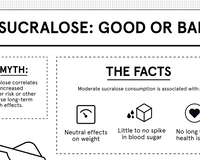
- Sucralose, acesulfame potassium, aspartame — non-nutritive sweeteners; effective at zero calories but bothers some users at high daily doses.
- Stevia, monk fruit — plant-derived; the cleanest options for sweetener-sensitive customers.
- Sugar alcohols (erythritol, maltitol, xylitol) — can cause GI distress over 30 g/day.
6. Calorie math: scoop weight vs nutrition facts
Whey isolate at 90% protein in a 30 g scoop means 27 g protein and roughly 3 g of carbs/fat/moisture. Whey concentrate at 70% protein in the same 30 g scoop means 21 g protein and 9 g of other stuff. Always cross-check:
- Total scoop weight (grams)
- Protein per scoop (grams)
- Calories per scoop
- Carbs + fat per scoop
If the math does not roughly add up (protein × 4 + carbs × 4 + fat × 9 ≈ calories), something is off.
7. Ingredient order matters
By Canadian law, ingredients are listed in descending order by weight. If "sugar" or "maltodextrin" is in the top three, the product is more sweetener than active ingredient. This is the fastest way to spot a low-quality protein bar or pre-workout.
8. Manufacturing site and allergen statement
Look for:
- Made in Canada or made in a GMP-certified facility
- Allergen statement (milk, soy, egg, tree nut, peanut, wheat, sesame, sulphites — all 9 priority allergens under Canadian law)
- Lot number and expiry date — needed for traceability and for return claims
Worked example: reading an Allmax Isoflex label
Take Allmax Isoflex (1 lb):
- NPN: present (look-up confirms whey protein isolate dose claim)
- Active dose: 27 g whey protein isolate per 30 g scoop
- Carbs: 1 g per scoop — true isolate, not concentrate
- Sweetener: sucralose, acesulfame potassium (zero-calorie)
- No proprietary blend — all numbers disclosed
- Certifications: Informed Choice
- Allergen: contains milk (whey is dairy)
That is a label that passes our framework. Compare it side-by-side with any cheaper "isolate" that shows only 18 g protein in a 30 g scoop, and you can see the dose math gives the game away.
Worked example: reading a pre-workout label
Take Mutant Madness Pre-Workout:
- Caffeine disclosed at exact mg per scoop
- Beta-alanine at clinical dose
- L-citrulline disclosed in grams, not buried in a blend
- NPN present
This passes. If a competitor's label says "Energy and Pump Matrix: 5,200 mg" without breaking down each ingredient, that fails.
The TNF 7-point label scan (memorize this)
- NPN visible? Yes / no
- Active ingredient doses disclosed individually? Yes / no
- Doses at clinical levels? (Check our table above)
- No proprietary blends for dose-sensitive ingredients? Yes / no
- Sugar or maltodextrin in top 3 ingredients? Walk away if yes (unless gainer)
- Allergen statement and lot/expiry visible? Yes / no
- Third-party seal present if you compete? Optional / required by your sport
Pairs well with
This guide pairs with our category buying guides at best protein powder Canada, best creatine Canada, and our full buying guides hub. For starter category reads see what is creatine and how to mix pre-workout.
Frequently asked questions
What is an NPN number on a supplement label?
NPN stands for Natural Product Number, an 8-digit code issued by Health Canada confirming the product has passed safety, evidence, and manufacturing review.
Are supplements without an NPN illegal in Canada?
Most NHP-class supplements sold to Canadian consumers require an NPN. A small set (e.g. some food-classified protein powders) are regulated differently. If unsure, ask the retailer.
What is the difference between Informed Choice and Informed Sport?
Informed Choice tests every batch for 250+ banned substances. Informed Sport adds stricter facility audits required by some pro leagues. Both are reliable for tested athletes.
Why do some labels not show the exact caffeine amount?
Usually because the caffeine is hidden inside a proprietary blend. Avoid these for any dose-sensitive ingredient.
What is the worst hidden ingredient on Canadian supplement labels?
Maltodextrin in protein powders or pre-workouts. It is a fast-absorbing carb often used to fluff up scoop weight. Acceptable in gainers; misleading in isolates.
How do I report a mislabeled supplement in Canada?
Use the Health Canada online complaint form, or report to the brand directly. NPN-listed products can also be cross-checked in the public LNHPD database.
What does "third-party tested" mean if there is no seal?
Some brands (PEScience, Allmax, PVL) test in-house plus contract labs but do not always carry a specific seal. Look for published Certificates of Analysis on the brand website if no seal appears.
Where can I find Canadian-compliant supplements in Montreal?
Top Nutrition & Fitness in Montreal stocks NPN-verified brands across all categories. Browse the full catalog.
Educational content only; not medical or regulatory advice. Always confirm regulatory status with Health Canada directly for prescription-adjacent products.